
C
Confidentiality
What is shared here stays here, with legally required exceptions named clearly.
The model
Quarterly gatherings. Trained hosts. Clinical backstop. Theology that will not rush you. The structure is the care.
At a glance
01
Chapters live inside congregations — not as a detached program, but as a faithful ministry of the church.
02
A bounded rhythm that honors grief without making it an identity, and that protects leaders from burnout.
03
Hosts of structure, not healers. They listen, keep safety, and never diagnose, fix, or interpret trauma.
04
C.R.E.A.T.E. guidelines, no spiritual bypass, no cross-talk, and a right to pass — every time.
05
Every chapter has a defined backstop: consult hours, debrief, and a path for crisis referral.
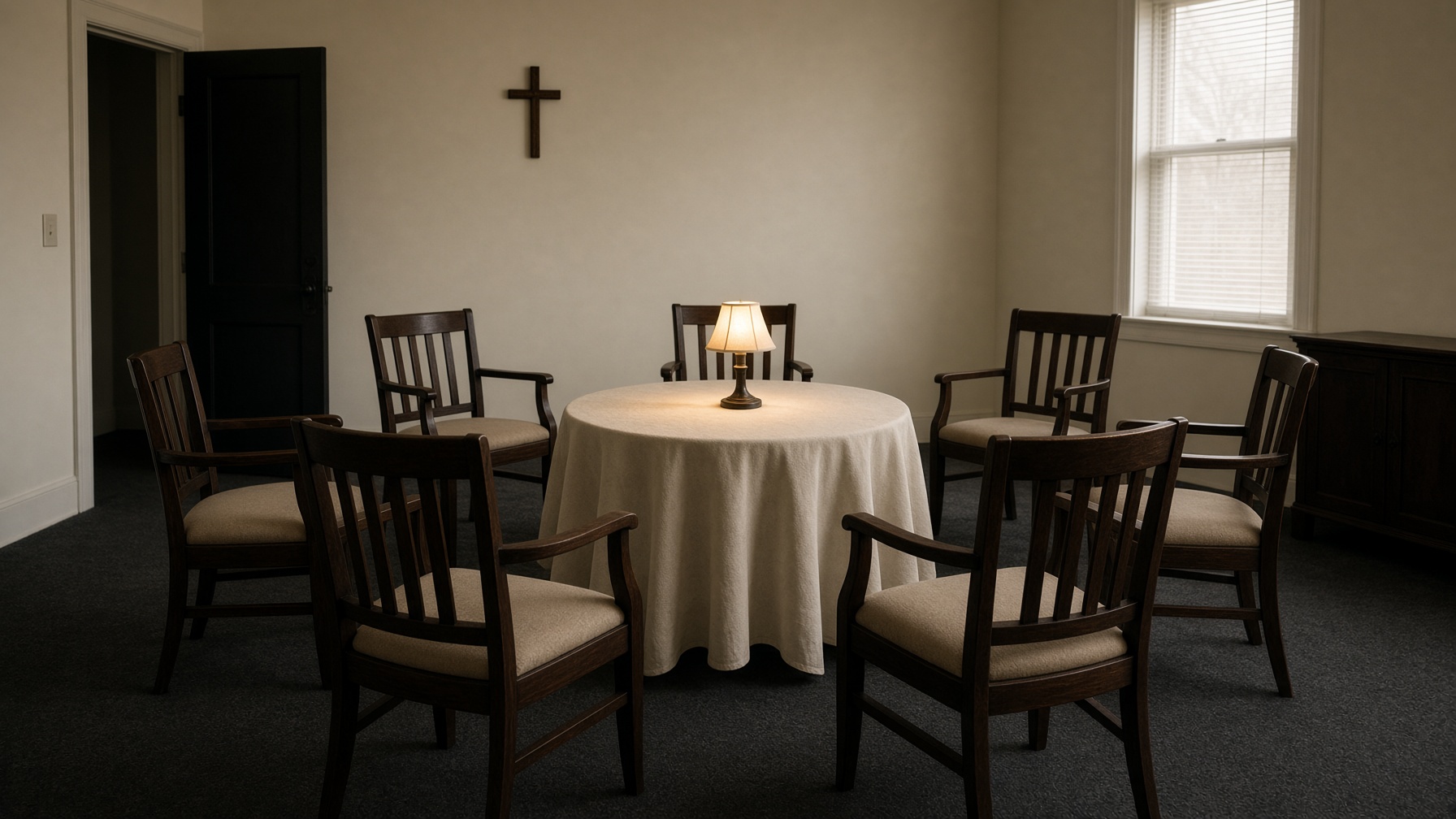
A gathering
15 min
A warm greeting, soft light, no loud music, printed guidelines.
10 min
Breath prayer, a slow psalm of lament, and a clear frame: this is not a space to fix.
10 min
A short reflection on lament, presence, or naming grief — never a sermon in reply to pain.
60–75 min
Timed, no interrupting, no advice, 3–5 minutes per share. Passing is always permitted.
10 min
Corporate lament and a prayer of presence. No forced hope statements. A quiet exit.
C.R.E.A.T.E.
C
What is shared here stays here, with legally required exceptions named clearly.
R
No correcting, ranking, or comparing grief.
E
Speak from your own story. Use “I.” No advice unless asked.
A
One conversation at a time. No cross-talk. Silence is allowed.
T
Safety is built through predictable structure, not intensity.
E
We witness. We do not fix, diagnose, or spiritualize pain.
Core cycle
Broad enough for mixed groups. Flexible enough for specialized lanes as a chapter matures.
01
Reaching UP
God’s nearness in pain and hiddenness.
Psalm 34:18 · Genesis 16:7–14
02
Reaching OUT
Finding community in loss and waiting.
Galatians 6:2 · Romans 12:15
03
Reaching UP + OUT
Lament, honesty, and naming our stories.
Psalm 13 · Lamentations 3
04
Holding HOPE
Hope that survives uncertainty and unfinished stories.
Romans 8:18–27 · 2 Corinthians 4:16–18
Facilitators are hosts, not healers
Facilitators hold space, keep time, and model humility. They do not diagnose, fix, or interpret trauma spiritually. Two leaders, always. Clinical consult when needed.
Do
Don’t
If you are in immediate danger, call 911. If you are in emotional crisis, the 988 Suicide & Crisis Lifeline is available 24/7.
Train with a church chapter